

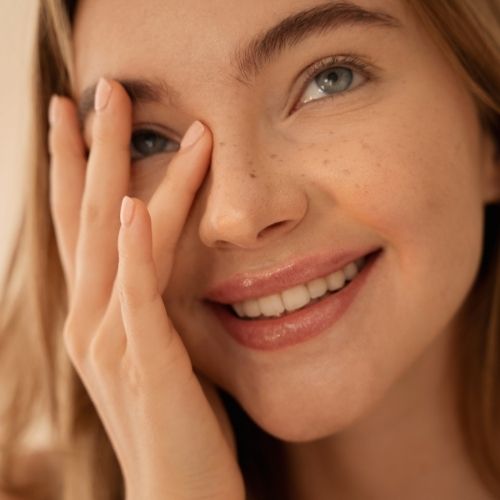
Although your eyelids function as a single unit, surgery on the upper and lower eyelids will produce different outcomes. At Daugherty Plastic Surgery, Dr. Robyn Daugherty helps Baton Rouge patients choose the right eyelid surgery approach based on what is actually causing concerns, such as heaviness, puffiness, or texture change. Addressing the correct eyelid through surgery can restore a more open, approachable look while keeping results subtle and natural.
Upper vs. Lower Blepharoplasty Basics
What’s the difference between upper and lower blepharoplasty?
Upper blepharoplasty focuses on the upper eyelids by removing excess skin and, when needed, addressing fatty tissue and muscular fascia to refine the lid contour or to raise a droopy lid. Lower blepharoplasty targets the under-eye area by addressing puffiness or bags, excess skin, and lower-lid laxity for a smoother transition from lid to cheek. Dr. Daugherty typically explains the difference by starting with anatomy: upper issues are often skin redundancy and crease heaviness, while lower issues are usually fat pockets, wrinkles, and under-eye “bags.”
A helpful way to separate the two procedures is to look at what each one is designed to improve:
- Upper blepharoplasty for hooding that reduces visible lid space and heavy upper-lid skin that can feel “droopy”
- Lower blepharoplasty for under-eye bags caused by fat pockets, as well as excess skin and fine wrinkles under the eyes
- Upper and lower blepharoplasty together when both concerns are present
During your consultation, Dr. Daugherty will match the procedure to the source of the concern.
Deciding Which Eyelid Surgery Fits Your Concerns
How do I know if an upper or lower blepharoplasty is right for me?
The right choice depends on what is driving the “tired eyes” look. If your upper lid skin folds over the lash line, hides your crease, or creates a heavy shadow near the outer corners, upper blepharoplasty is often the better match. If your main concern is persistent puffiness or under-eye bags that do not improve with sleep, skincare, or concealer, lower blepharoplasty is usually the more direct solution. Dr. Daugherty will evaluate your eyelid skin, fat distribution, muscle tone, and brow position since a low brow can mimic upper-lid excess.
During a consultation, factors that commonly guide the recommendation are whether:
- Upper-lid skin is hanging or blunting the lid crease
- The upper lids are drooping and covering the iris or colored part of the eye
- Puffiness is caused by fat pockets rather than swelling
- Lower-lid skin quality is crepey, wrinkled, or lax
- Brow position is contributing to upper-lid heaviness
- Your goals are functional, cosmetic, or both
A clear diagnosis prevents over-treatment with unnecessary procedures.
What Upper and Lower Blepharoplasty Results Can Look Like
What do blepharoplasty upper and lower results look like?
Upper blepharoplasty results typically yield a cleaner lid contour, more visible space above the lash line, and a sharper, more refreshed crease. Lower blepharoplasty results usually look like smoother under-eyes, less puffiness, and a softer transition from the lower lid into the cheek. Dr. Daugherty’s goal is a rested appearance rather than a dramatic change. Incisions are generally placed in discreet locations, including the natural crease of the upper lid, inside the lower lid, or just below the lower lashes, so scars are designed to blend as they heal.
Patients often describe results as:
- Eyes that look more open and less hooded after upper blepharoplasty
- Less shadowing and heaviness at the outer upper lid
- Under-eye bags that look reduced and smoother after lower blepharoplasty
- A brighter, more approachable look without changing facial identity
- Improved symmetry when one lid has more heaviness than the other
Results refine gradually. Early swelling can temporarily mask the final contour, which is why Dr. Daugherty discusses realistic timelines and what healing looks like in the first weeks.
Pairing Eyelid Surgery with Other Facial Treatments
What other facial treatments can be combined with upper and lower blepharoplasty?
Combination planning is common because the eyes do not age in isolation. For some patients, brow descent is the main reason the upper lids look heavy, so a brow lift may be discussed alongside upper blepharoplasty. Some patients require ptosis repair as part of an upper blepharoplasty if the eyelids are drooping over the colored part of the eyelid. Untreated ptosis will make the blepharoplasty appear unfinished and often aged or weird instead of youthful. Others benefit from eyelid surgery plus a facelift if lower-face laxity is also present. Dr. Daugherty will help you prioritize what matters most so the plan stays efficient and cohesive rather than overly layered.
Common combinations that may be considered include:
- Ptosis repair as part of an upper blepharoplasty when ptosis is present
- Brow lift with upper blepharoplasty when brow descent drives lid heaviness
- Facelift planning when eyelid concerns are part of overall facial aging
- Staged planning when you want gradual change with clear recovery windows
- A focused eyelid-only plan when the eye area is the primary concern
The best combination is the one that matches your anatomy. Dr. Daugherty will explain why pairing helps, what it adds to recovery, and whether it improves the result enough to make it worthwhile.
Schedule Your Eyelid Surgery Consultation with Dr. Robyn Daugherty Today
Dr. Daugherty brings careful evaluation, discreet incision planning, and a natural-looking result approach to upper and lower blepharoplasty at Daugherty Plastic Surgery in Baton Rouge, LA. Ready to explore which eyelid surgery option fits your concerns best? Schedule a consultation with Dr. Daugherty today.